Amber Purple
How can one glass become a rainbow?
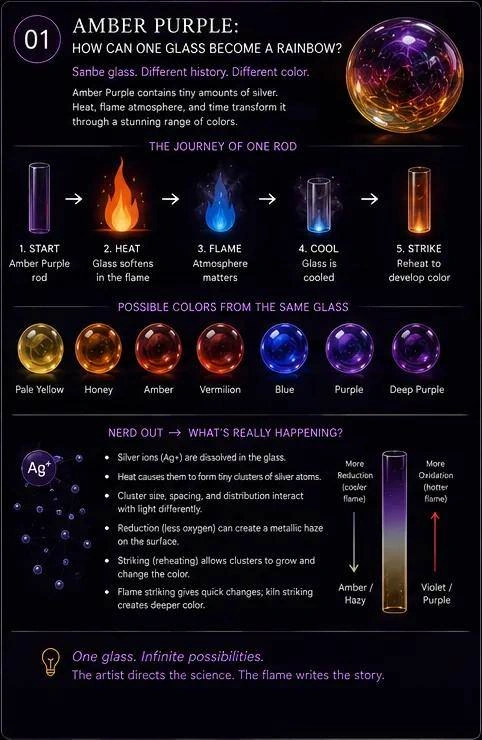
Same glass. Different history. Different color.
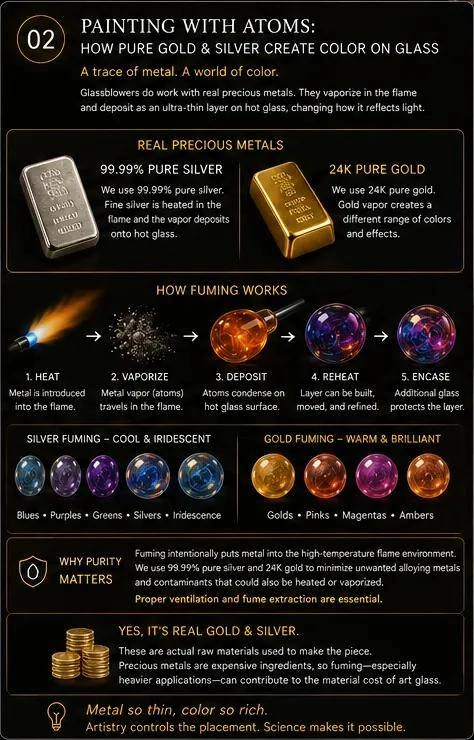
Amber Purple is a silver-bearing borosilicate family whose final appearance depends heavily on what happens to it at the torch. Heat, flame atmosphere, cooling and reheating can move the color through pale yellow and honey into amber, blue, violet and purple.
The important idea is that the artist isn't simply uncovering a color that was hidden in the rod. The glass is developing color as its chemistry and microscopic structure respond to its thermal history.
Nerd Out · What's really happening?
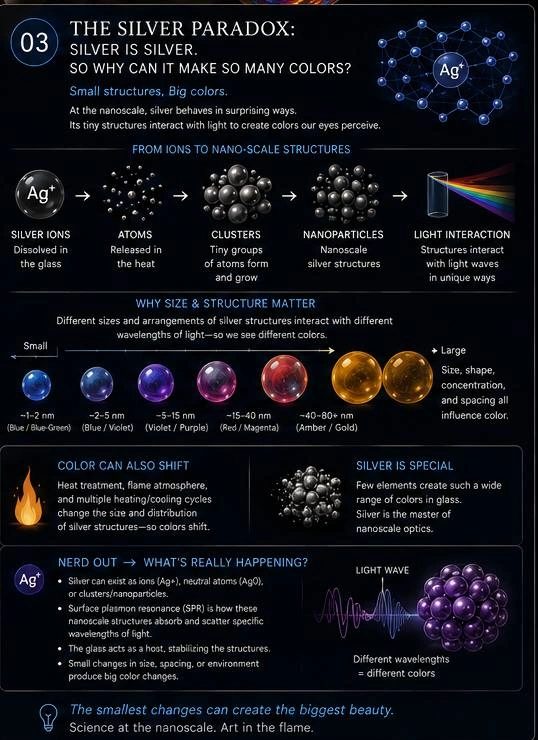
Amber Purple belongs to the broader family of silver-containing striking colors. Heating and cooling can change the chemical state, location and clustering of silver species in the glass. Oxidizing versus reducing flame conditions also influence the result, and the exact response varies with formulation, heat history and surrounding glass.
Striking is the controlled use of heat and cooling to develop color. Flame striking can change color quickly at the bench; kiln striking can continue that development more gradually during controlled heat treatment.